

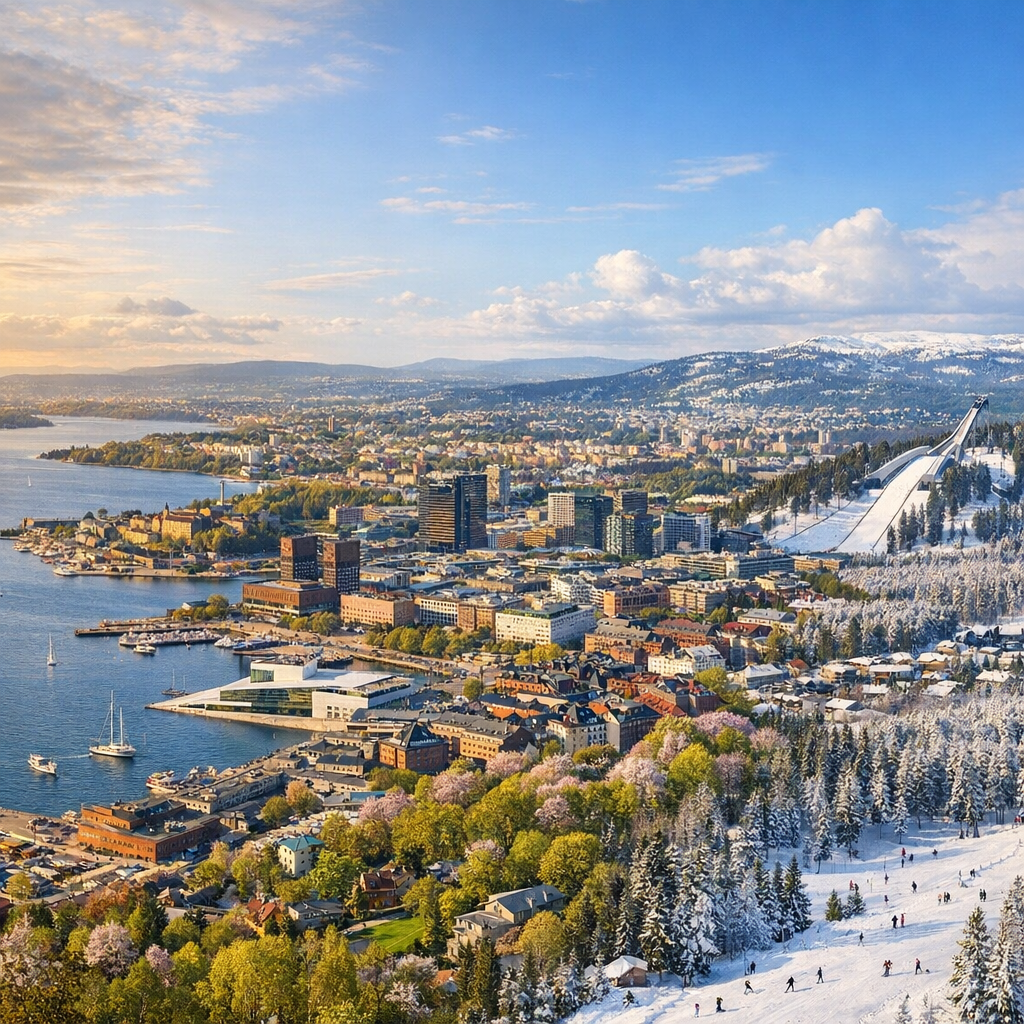
Oslo, Norway’s capital, boasts a distinctive climate shaped by its geographical position and topographical features. Nestled at the head of the Oslofjord and shielded by surrounding mountain ranges, the city experiences a temperate, continental-leaning climate.
Seasonal Variations
Winter (December–February)
Winters in Oslo are characterized by cold temperatures, with averages ranging from -6.8°C to -0.9°C. Snowfall is common, and daylight hours are limited, contributing to the season’s serene ambiance.
Spring (March–May)
Spring brings a gradual warming, with temperatures rising from -3.3°C in March to 15.8°C in May. This season witnesses the thawing of snow and the blossoming of flora, marking a vibrant transition from winter.
Summer (June–August)
Summers are mild and pleasant, with average temperatures between 15.1°C and 21.5°C. The city enjoys extended daylight hours, providing ample opportunity for outdoor activities and exploration.
Autumn (September–November)
Autumn sees a gradual cooling, with temperatures decreasing from 15.1°C in September to 3.2°C in November. The season is marked by colorful foliage and increased rainfall.
Climate Change Impact
Over the past century, Oslo has experienced a significant warming trend. Data indicates that the mean temperature has risen from 6.17°C during 1901–1910 to 8.02°C in 2016–2025, reflecting a warming of 1.85°C. This increase has led to more intense precipitation events, longer periods of rainfall, and a higher frequency of winter precipitation falling as rain rather than snow.
Projections suggest that if global greenhouse gas emissions continue to rise, Oslo could see an additional temperature increase of 3–6°C by 2100. Such changes may result in more frequent heatwaves, droughts, and a rise in sea levels, posing challenges like storm surges and coastal flooding.
Microclimates Within the City
Oslo’s varied topography contributes to distinct microclimates. Elevated neighborhoods, such as Holmenkollen and Voksenkollen, often experience cooler temperatures and retain snow longer than lower-lying areas. In contrast, coastal regions like Bygdøy and Fornebu tend to be milder and slightly windier, influenced by their proximity to the fjord.
Conclusion
Understanding Oslo’s climate is essential for residents and visitors alike. Recognizing seasonal patterns and the ongoing impacts of climate change can aid in better preparation and adaptation strategies, ensuring the city’s resilience in the face of evolving environmental conditions.