

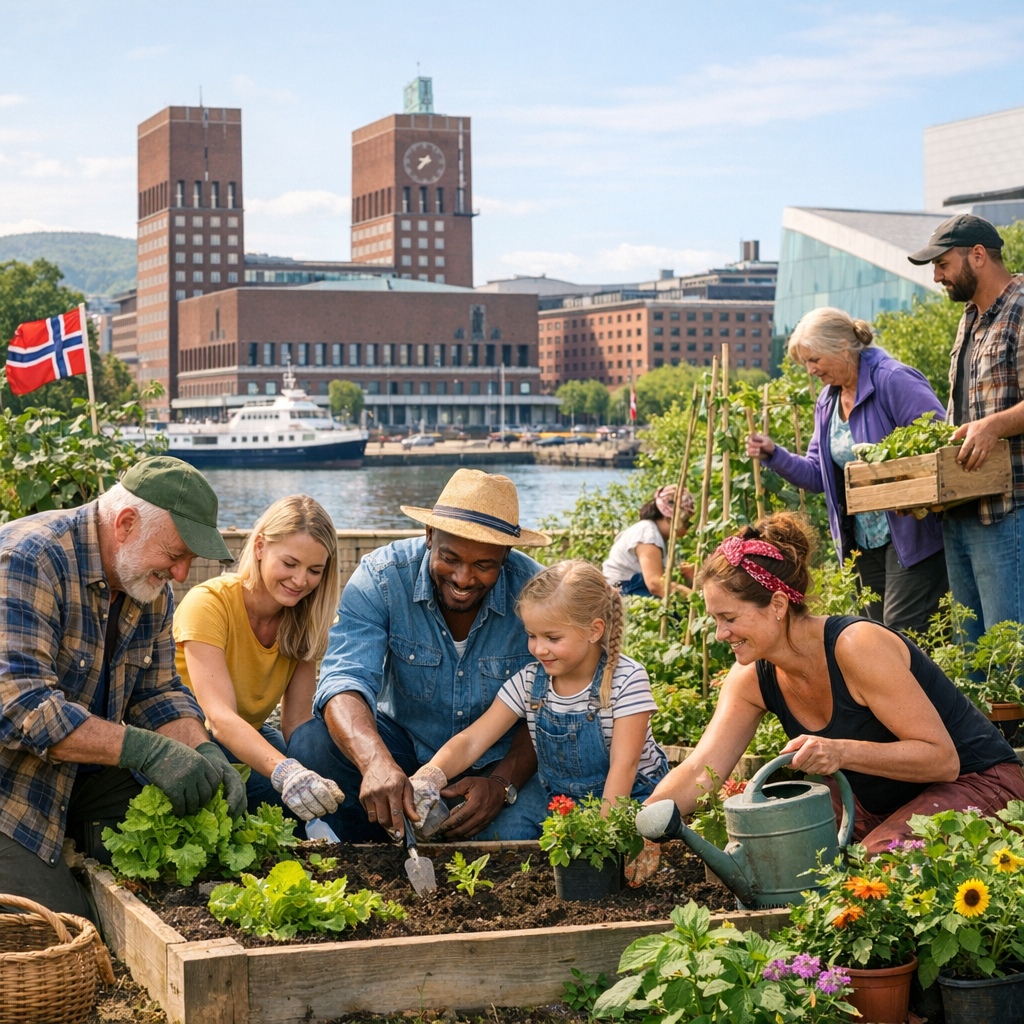
Oslo’s urban green spaces are more than just patches of nature amidst the cityscape; they are vibrant hubs of community engagement and social cohesion. Initiatives like Mangfoldshagen, a community garden in Bjørvika, exemplify this spirit. Once a collection of private allotments, Mangfoldshagen has transformed into a shared space where residents collaboratively cultivate plants, share knowledge, and strengthen community bonds. This evolution underscores the potential of urban agriculture to foster inclusivity and environmental stewardship.
Similarly, the Flatbread Society has established a public baking facility and grain field, creating a unique gathering place that blends cultural traditions with urban farming. This project not only provides a space for communal activities but also emphasizes the importance of sustainable food production within the city.
On a broader scale, the EdiCitNet project integrates edible city solutions to enhance social resilience and sustainability. By promoting urban agriculture and green infrastructure, EdiCitNet aims to create productive and inclusive urban environments, demonstrating the multifaceted benefits of integrating green spaces into urban planning.
These initiatives highlight a growing recognition of the value of urban green spaces in Oslo. They serve as platforms for community interaction, education, and environmental awareness, contributing to a more connected and sustainable urban life.