

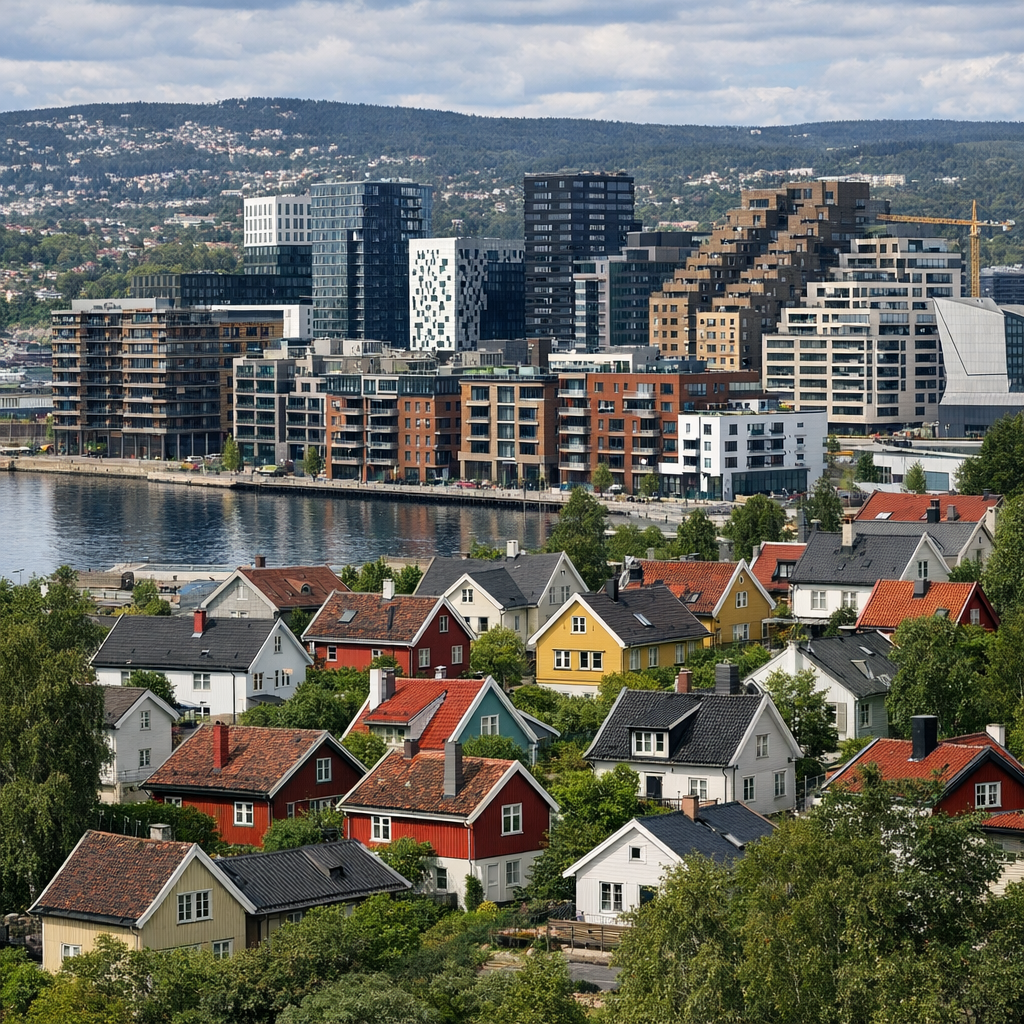
Oslo’s housing market is a dynamic landscape influenced by various factors, including economic conditions, population growth, and development projects. This guide provides an overview of current market trends, rental insights, home buying considerations, and local developments to assist residents and potential buyers in making informed decisions.
Current Market Trends
Oslo continues to experience a tight housing market characterized by high demand and limited supply. The average price per square meter for apartments in central areas ranges between 90,000 and 130,000 NOK. Despite recent interest rate increases, the market has shown resilience, with moderate annual price growth of 3–5% across most districts. This stability is attributed to a combination of low new housing construction and a steady influx of residents seeking accommodation.
Rental Market Insights
The rental market in Oslo remains robust, driven by a diverse population of students, young professionals, and expatriates. Popular districts such as Grünerløkka, Tøyen, and Grønland are particularly sought after due to their vibrant communities and proximity to amenities. Gross rental yields for small apartments hover around 4.4%, offering investors a reasonable return. However, the market is competitive, with vacancy rates below 2% in central areas, indicating strong demand for rental properties.
Home Buying Considerations
For those considering purchasing a home in Oslo, it’s essential to understand the buying process and market dynamics. Properties are typically listed on platforms like Finn.no, accompanied by detailed reports on the home’s condition and financial information. Prospective buyers should be prepared for bidding rounds, as competition can be intense. Additionally, understanding the various ownership structures, such as freehold and cooperative housing, is crucial for making informed decisions.
Local Developments
Oslo is undergoing significant development projects aimed at addressing the housing shortage and enhancing urban living. Areas like Bjørvika are witnessing new residential complexes with modern amenities, contributing to the city’s evolving skyline. However, the pace of new construction has been slower than anticipated, leading to a persistent supply-demand imbalance. This underscores the importance of staying informed about upcoming projects and their potential impact on the housing market.
In conclusion, navigating Oslo’s housing market requires a comprehensive understanding of current trends, rental dynamics, and local developments. Whether you’re renting, buying, or investing, staying informed and seeking professional advice can help you make sound decisions in this competitive landscape.