

By Ole Solberg
Warming Trends and Milder Winters
Over the past century, Oslo has seen its average annual temperature rise by nearly 1.85 °C. Once icy winters and deep snowfalls are giving way to shorter frost periods, while the growing season—when plants flourish—is now about 30 days longer than in the 1970s. These trends affect not only gardens and forests, but also urban life: less snow means more rain during what were previously winter months. But with warmer weather come new demands on streets, buildings, and heating systems. (Temperature trends based on measurements from 1901–2025.)
More Rain, More Trouble With Stormwater
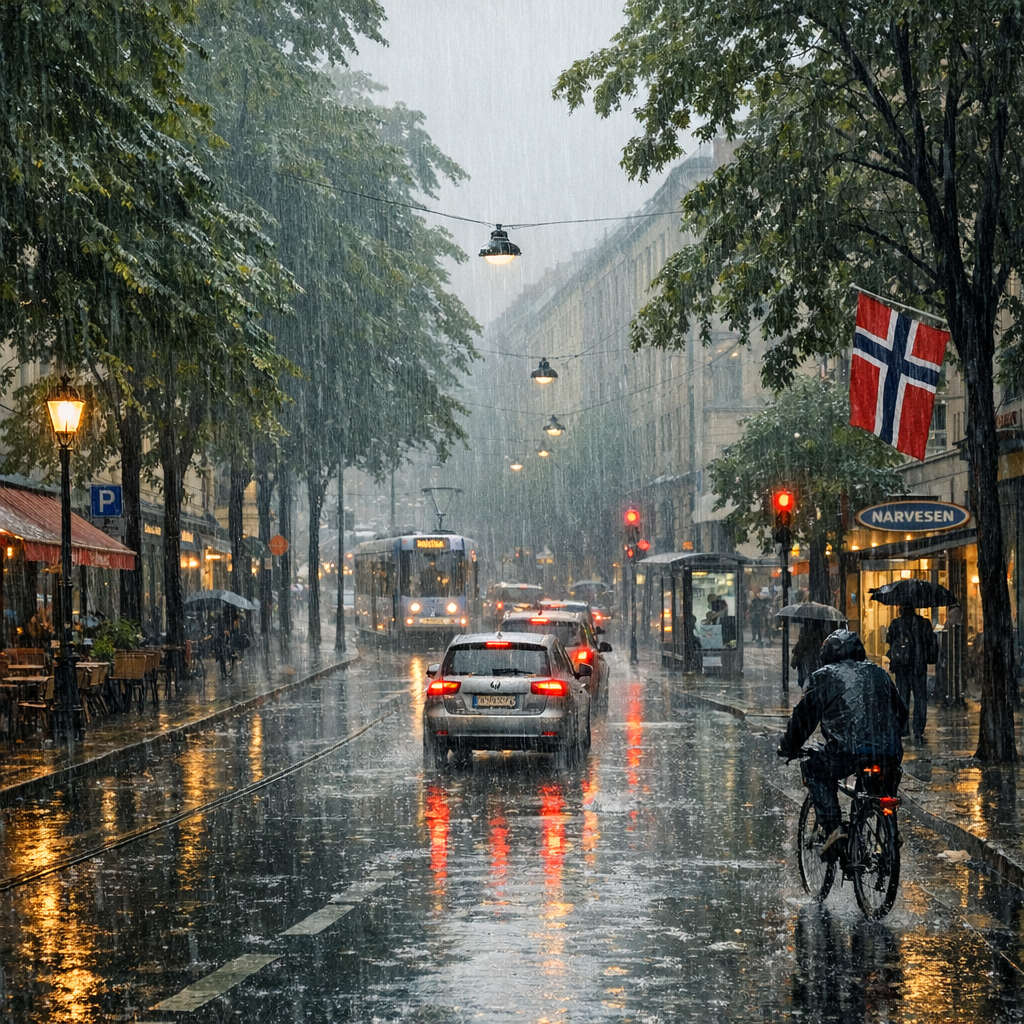
Oslo is experiencing heavier and more frequent precipitation events. Stormwater—rain or melting snow—can overwhelm drains, flood streets, and load pollutants into the Oslofjord. City authorities are now giving high priority to stormwater management, including redesigning outdoor spaces, reopening waterways, installing green roofs, and expanding blue–green infrastructure to absorb rain naturally. (Stormwater management is a core part of Oslo’s climate adaptation strategy.)
Protecting Carbon Sinks and Natural Spaces
Forests, wetlands, soil, and vegetation are essential carbon sinks—absorbing more carbon than they release. Oslo’s plans include nature-friendly forestry practices, protection of biologically valuable green areas, restoration of wetlands and ponds, and efforts to identify and preserve land rich in carbon. Such steps not only counter climate change, but help buffer against floods, provide cooling, and enrich biodiversity.
The City’s Preparedness and Public Attitude
Officially, Oslo aims to cut direct greenhouse gas emissions by 95 % by 2030 relative to 2009 levels, with strong adaptation measures to make the city more resilient to climate impacts projected through 2100. Residents are aware: about 45 % are “very” or “quite” concerned that Oslo isn’t yet fully prepared for climate change and extreme weather. On a brighter note, a large majority—nearly three in four—believe it’s important that Oslo strengthens resilience. That support underpins many policy moves.
What This Means for Everyday Life
For Oslo residents, these shifts mean we need to think differently about clothing, home maintenance, and transport. Rain boots might replace snow boots; waterproofing and insulated roofs gain importance. Gardeners will notice an earlier start to planting, and allergies may stretch over more months. On the infrastructure side, expect more rain gardens, permeable pavements, and changes in city planning to make neighbourhoods more resilient.
Looking Ahead
Adaptation is not a one-time fix but an ongoing process. As Oslo works toward a new climate strategy extended through 2040, continuous monitoring of weather patterns, ongoing involvement of communities, and flexible planning will be key. For those of us in Oslo, staying informed—and advocating for green infrastructure in our own neighbourhoods—can help us adapt together.