

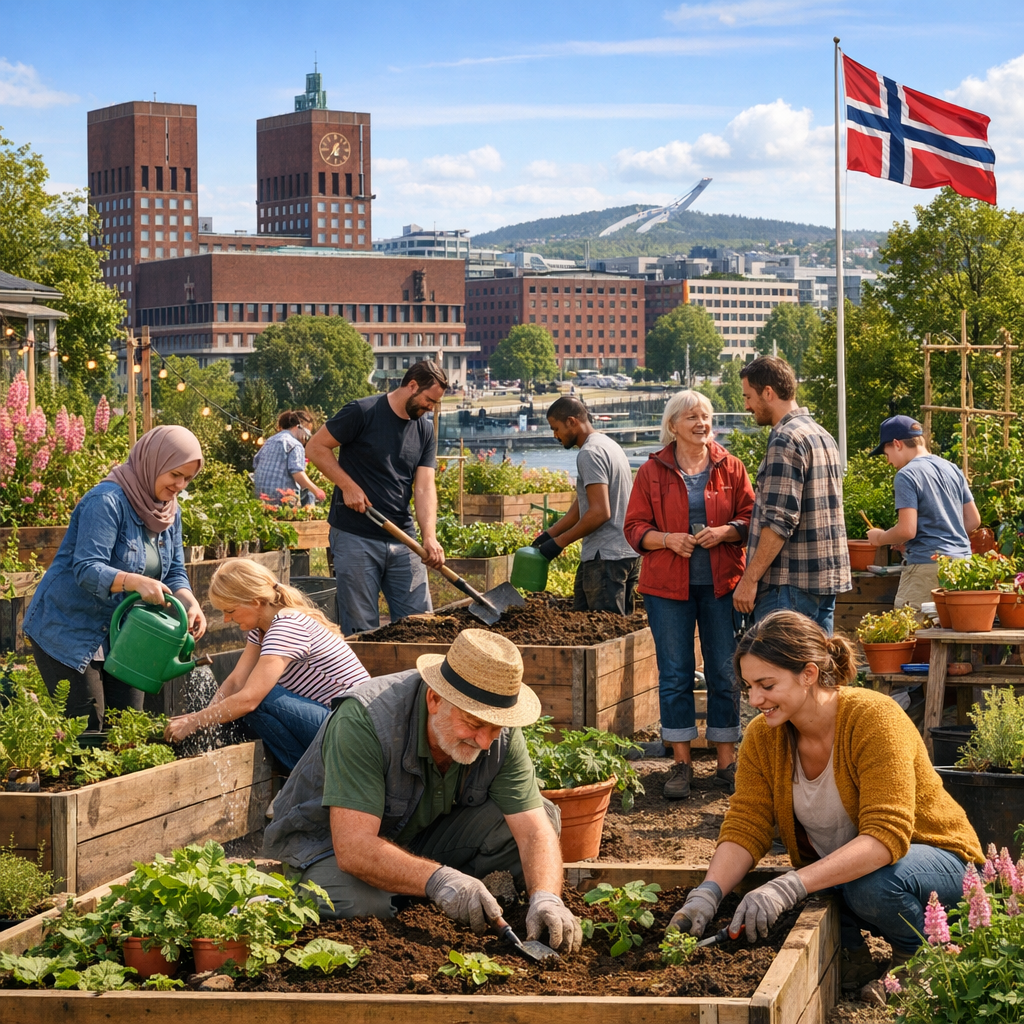
Oslo’s commitment to enhancing urban green spaces has led to a variety of community-driven initiatives that not only beautify the city but also foster social cohesion and environmental sustainability.
Community Gardens: Cultivating Connections
One notable example is Mangfoldshagen, a community garden project in the heart of Oslo. Previously an area divided into private allotments, it has transformed into a thriving public agricultural community. Here, individuals from diverse backgrounds come together to grow plants, share knowledge, and strengthen community bonds. The garden serves as a testament to the power of collective effort in urban agriculture.
Edible City Solutions: Integrating Nature into Urban Life
The EdiCitNet project focuses on integrating edible city solutions to create socially resilient and sustainably productive urban areas. By leveraging urban landscapes for food production, the initiative empowers local communities to address social challenges through inclusive and participatory dynamics, fostering new green businesses and jobs.
Pollinator Passage: Supporting Urban Biodiversity
ByBi’s Pollinator Passage project aims to enhance urban biodiversity by creating habitats for pollinators across Oslo. This initiative mobilizes residents to establish flowering spaces, from extensive farming areas to small balcony pots, providing essential food and shelter for pollinators and contributing to the city’s ecological health.
Parkgater: Transforming Streets into Green Spaces
Oslo is also reimagining its streetscapes through the development of ‘parkgater’—streets where vehicular traffic and parking spaces are replaced with green areas, trees, and public seating. This transformation aims to create more pleasant and sustainable neighborhoods, with Dannevigsveien on Sagene being the first to undergo such a change.
These initiatives reflect a collective effort by Oslo’s residents and organizations to integrate green spaces into the urban fabric, enhancing both the environment and the quality of life in the city.